When planning a Peru travel itinerary, it’s easy to look at the map and feel like you can visit all the main spots, like Lima, Mancora, Cusco, Machu Picchu, in just a week or two. But after spending 3 full weeks backpacking through the country, I can tell you: distances are long, the country is massive and the extra time you’ll need to adjust to the altitude is no joke!
Even though 3 weeks still felt a bit fast for me (and yes, I had to cut a few stops along the way), 2 weeks is still the sweet spot for an unforgettable trip if you plan efficiently and set the right priorities.
In this guide, I’m sharing my ultimate 2-week Peru itinerary for travellers with limited vacation time.
Planning a longer 3 or 4-week trip? If you have extra time to explore deeper, definitely check out Vicky and Malte’s blog, Traveling is our Passion! Since Vicky is originally from Peru, their blog is filled with incredible insider gems, detailed regional guides and extended routes across the country.
Essential Planning Tips for Your Peru Travel Itinerary
Best Time to Visit & Weather
When planning your trip, keep in mind that Peru has three distinct climate zones and two main seasons: the dry season (May to October) and the rainy season (November to April).
- The Andes: The dry season (May to October) brings sunny days and clear skies, which is ideal for hiking. However, at night temperatures can still drop down to minus degrees. The rainy season (November to April), might bring rain showers and muddy trails.
- The Coast: Coastal weather works in reverse! Summer runs from November to April with warm, sunny beach weather. Winter (May to October) brings persistent fog and cooler days.
Planning a February Trip to Machu Picchu?
The classic Inca Trail is closed every February for annual maintenance. However, I actually visited in February myself and got super lucky with clear skies! Instead of the Inca Trail, I hiked the Salkantay Trek to Machu Picchu, which stays open the whole year and ended up being the absolute highlight of my trip.

Visa & Passport Requirements
Overall I always recommend checking current visa requirements on official government sites. If you hold a passport from the EU, US, Canada, UK or Australia, you don’t need a travel visa for up to 90 days. You’ll just get an entry stamp when you land or cross the border.
However, make sure to keep these two things in mind before you go:
- Passport Validity: Your passport needs to be valid for at least 6 months after your arrival date.
- Proof of Onward Travel: You might be asked to show a return flight or bus ticket proving that you’re leaving the country.
Want this passport for yourself?
That image up there isn’t just a fun graphic… this LTR Passport can actually be yours!
When you subscribe to our newsletter, you get far more than just email updates. You’ll unlock your very own digital passport, which serves as your personal key to our hidden destination pages. Inside, you’ll gain exclusive access to our self-made Google Maps lists that you can use to plan your next adventure.
Ready to grab yours? You’ll find the subscription box at the end of this post (and at the very bottom of the page)!
Vaccines & Travel Insurance
These are two things where we all secretly wish we could save some money and just go without. But it’s probably the most important part of your trip where you shouldn’t cut your budget.
Recommended Vaccines
There are a few vaccines you should consider when travelling to Peru. A Yellow Fever vaccine is highly recommended if you plan to visit low-altitude areas or head into the Amazon jungle.
Overall, make sure to visit your doctor or a travel clinic a few months before your trip, where they will give you advice based on your exact itinerary.
Travel Insurance
Insurance is something you definitely shouldn’t skip. There are plenty of budget-friendly travel insurance options out there, so just make sure to find one that fits your expectations. It’s something you hope you’ll never need, but as soon as something goes wrong, it’s a total lifesaver.
Reality check: recently Emma took a trip to Thailand, lasted 42 hours and then broke her foot. Without insurance, that situation would have ended so much worse!
Budget Breakdown
Planning a trip to Peru on a backpacker budget, actually takes some strategy. To avoid tourist traps and keep long travel days cheap, read our full guide on How to Travel Long Distances Cheaply. It’s honestly the best starting point!
Overall, daily life in Peru is relatively cheap, especially compared to Europe or North America. Here’s a quick reality check on what to expect budget wise:
- Accommodation: Hostels were insanely affordable! I usually paid between 5€ and 10€ per night for a dorm bed, which almost always included breakfast. Just that alone keeps your daily living costs insanely low.
- Food & Eating Out: Daily meals and local street food are super budget-friendly. Also eating out wasn’t usually that expensive, especially if you avoid the very fancy spots.
- Getting Around: Public transport, long-distance buses and even Ubers in the cities are very cheap and easy to use.
- Tours & Activities: Guided tours can be a bit pricier depending on what you do, but they’re still super fair for what’s included. For example, our full-day trip to the desert (Paracas & Huacachina) cost around 60€.
- Flights (the main expense): The biggest part of your travel budget will definitely be your flights. The only way to avoid even more expenses is packing light!
Currency & Payments
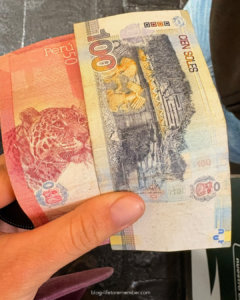
The currency in Peru is Peruvian Sol (PEN).
While paying by card is common in most touristic places, you’ll definitely need cash for local street markets, small stores, or tipping your guides on tours. That’s why I always made sure to have some cash with me, especially before joining any day trips or guided tours.
To avoid exchange fees, I use Revolut for all my travels. It’s honestly the easiest way to save fees on card conversions and the app helps to keep a clear overview of your daily expenses.
Best eSIM for Peru Travel
To save yourself from the stress of having no signal when landing in Peru, I highly recommend setting up an eSIM before you leave. It allows you to connect to the internet as soon as you touch the ground, without having the hurry to find working WiFi, or an expensive SIM card at the airport.
After trying out several different providers and using Airalo for a long time, I felt like it was still a bit too expensive. Recently, we came across Saily eSIM and it’s honestly the best option I’ve used so far! It works super well, the app is simple to navigate and it’s surprisingly affordable.
Saily Discount Code: If you decide to go with Saily, you can save 10% on your purchase by using our discount code LIFETOREMEMBER at checkout. This LINK brings you to their offer.
Do You Need Spanish in Peru?
To make it quick: no, you don’t need to be fluent in Spanish to visit Peru. It’s a major travel destination and in tourist areas like Cusco, Lima or on organised tours, most people speak at least basic English.
However, outside of the main tourist bubbles, like in small local eateries, taxis, markets, or bus stations, English is rarely spoken. I found myself in plenty of situations where I had to improvise! To be prepared for situations like these, here are two things I highly recommend doing before you start your journey:
1. Download the Google Translate App
Download both the English and Spanish dictionaries on the Google Translate app. This allows you to translate phrases offline without needing Wi-Fi or local data. You can type, use the voice feature, or scan menus and signs with your camera (that’s honestly life saving, especially when you want to know the ingredients of snacks or your groceries).
2. Learn a Few Essential Phrases
Learning just a few basic words can already be a game changer. Not only does it make daily interactions much easier, but locals really appreciate the effort, since it shows respect for their culture!
Plant-Based Tip: If you have dietary restrictions, check out my guide on vegan backpacking in Ecuador and Peru, where I’ve listed Spanish phrases I used on a daily basis, whenever I ordered food.
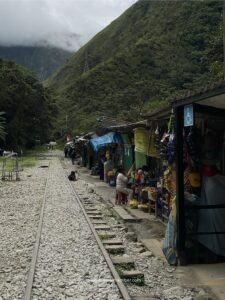
Here are the most useful everyday phrases to screenshot or save in your notes app:
Basics
- Hello: Hola
- Goodbye: Chao / Hasta luego
- Thank you / Thank you very much: Gracias / Muchas gracias
- Please: Por favor
- No problem / You’re welcome: De nada
Shopping & Paying
- How much does this cost?: ¿Cuánto cuesta esto?
- With card, please: Con tarjeta, por favor
- I’ll pay with cash: Pago en efectivo
Getting Around
- Where is the bathroom?: ¿Dónde está el baño?
- Do you speak English?: ¿Hablas inglés?
Peru travel itinerary 2 weeks
The preparation part turned out a bit longer than expected, but with those points in mind, you’re almost good to go! Next up is planning your actual day-by-day route.
This 2 week Peru travel itinerary starts and ends in the capital city, Lima.
DAY 1 – arrival in LIMA
Depending on your flight and distance, you might arrive in Lima pretty exhausted. To make things easier, it’s best to know your transportation plan (from the airport to the hostel) before you land.
Getting from the airport to the city center:
- Uber: We took an Uber at night, which was super convenient and affordable since we split the cost between the three of us.
- Airport Express Lima (Shuttle Bus): If you arrive on daytime, I’d recommend taking this shuttle! It’s one of the cheapest, safest and easiest options to get to Miraflores (very central in the city). You can book online beforehand and the tickets stay valid up to 6 months. So there’s zero stress if your flight is delayed.
- QuickLlama Airport Shuttle: a minibus alternative, which requires a booking beforehand!
Important Safety Note: The International Airport, is located in an area that can be quite unsafe for tourists. Do not walk around outside the airport with your luggage or jump into unauthorised taxis! Stick strictly to pre-booked shuttles, official airport taxis, or your Uber App.
Where to stay in Lima: Sadly, I wasn’t able to spend as much time in Lima as I wished, since our schedule was pretty tight when we arrived. But from my experience, there are two main neighbourhoods that travellers love: Miraflores and Barranco. I personally preferred Barranco, since it has such a cool and artistic vibe.
If you’re looking for a hostel recommendation, this next spot was actually one of my absolute favourite stays in Peru: Ancestral Hostel Barranco
The rooms are so pretty, including beds with curtains and an amazing rooftop view. Surprisingly the hostel doubles as a fancy restaurant, where we once enjoyed our amazing vegan dinner. I’m still dreaming about their vegan cookie!

Overall dedicate your first day to checking into your hostel, exploring the surrounding neighbourhood, grabbing a good meal and getting some sleep to recharge for the rest of your trip!
DAY 2 – Barranco & Coastal Walk
Since our time in Lima was pretty short, we didn’t get to explore that many parts and hidden gems of the city. But if I had to spend a full day again, I’d stay around Barranco and Miraflores.
– Explore Barranco’s Street Art: Start the morning slow and discover Barrancos vibrant street art. The neighbourhood is full of impressive colourful wall paintings, cool local cafes and historic architecture.

– Walk along the Coast to Larcomar: From Barranco, walk up along the coastal boardwalk. It’s right on the cliff edge with insane views of the pacific ocean on one side and the city views on the other (this was literally my favourite photo spot in Lima). Walk all the way to Larcomar, a shopping center built directly into the side of the cliff!

– Parque del Amor: Just after Larcomar, stop by this coastal park inspired by Parc Güell in Barcelona. It’s famous for its colourful mosaic walls and is one of the best places in the city to catch the sunset over the ocean.
Must-Try Vegan Spot: If you are vegan (or just love good food), you have to eat at Seitan Urban Bistro in Miraflores! It’s 100% vegan and genuinely so good, they serve plant-based versions of classic Peruvian dishes like Lomo Saltado and the best carrot cake I ever tried. Absolutely a must-try!

DAY 3 – Cats & the Historic Center
For day three I would start in Miraflores.
– Parque Kennedy (Cat Park): Located in Miraflores, this park is home to many stray cats. The best part is that you’ll find a bunch of cat food and small cat houses in the middle of the park, since the community is actually taking care of them. They just chill in among the flowers and benches around the park. Very cute to watch if you’re a cat lover!

– Historic Center & Plaza de Armas: Head downtown to see Lima’s colonial side. The main square (Plaza de Armas) is surrounded by impressive buildings, the Government Palace and the Cathedral. Nearby, you can also wander through Chinatown (Barrio Chino) for a totally different vibe and great street snacks.

Go to bed early though, since the next day will be intense!
DAY 4 – Day trip from Lima: Paracas, Ica and Huacachina
For this day get ready for a full-day guided tour, to see the coastal desert. We booked our tour through Get Your Guide, with a tight schedule which allowed us to see a lot of incredible spots in a single day!
I remember my alarm going off at 3:15 AM because the pickup time is super early. It’s definitely an exhausting day, since you start before dawn and only return to Lima late at night, but it was so worth it.

I won’t go into every single detail, but here are the main highlights of the day:
– Boat Tour to Islas Ballestas: This boat tour takes you out to islands packed with wildlife: sweet sea lions, seabirds and if you’re lucky, wild Humboldt penguins! Also at one point the boat slows down right in front of the Paracas Candelabra, a giant ancient sign carved right into the sand.
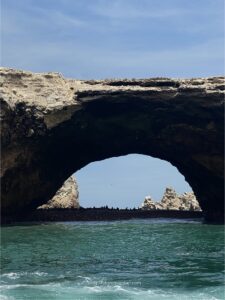
– Pisco & Wine Tasting: After a super delicious traditional lunch, we stopped at a vineyard for a Pisco and wine tasting session. It was such a fun activity!

– Huacachina Oasis & Sandboarding: Hands down my favourite stop of the day! Standing at the top of the massive dunes and looking down at the oasis below is completely surreal. But as stunning as the views were, the real highlight was the adrenaline rush. It was literally like a rollercoaster driving over the dunes in a dune buggy, followed by sliding down the giant sand hills on a sandboard. SO much fun!

Budget Travel Tip: If you prefer doing this trip on a tighter budget and without a guided tour, check out Vicky and Malte’s 2-Day Ica and Paracas Travel Guide.
DAY 5 – Brunch in Lima & Flying to Cusco
After this long day trip, starting the next day slow is definitely the way to go. Treat yourself with a nice brunch in Lima, or if you’re staying at Ancestral Hostel, start your morning up on the rooftop!
At some point of the day it’s time to move on to Cusco. There are two main ways to get there:
- By Plane (recommended): We booked a flight to Cusco, which saved us a massive amount of time. It only takes about 1.5 hours to fly from Lima into the Andes!
- By Bus: The cheaper alternative is taking an overnight long-distance bus, which can take between 15 to 21 hours. The hop-on, hop-off company PeruHop offers great bus routes with stops along the way so you can explore at your own pace. However, if you only have a strict 2-week timeline, I highly recommend taking a flight.
Where to Stay in Cusco: Cusco has plenty of great hostels, but one in particular really stands out: Black Llama Hostel. It’s insanely popular and also slightly pricier than the average, which is why we saved it for a treat after the Salkantay Trek, but I’d highly recommend staying there for at least a night!

Altitude Sickness Tip: Cusco sits at 3,400 meters above sea level and you’ll likely feel the altitude as soon as you step off the plane! If you have altitude sickness pills, make sure to take one on the plane already.
Once you check into your hostel, listen to your body. If you’re feeling full of energy and the altitude isn’t bothering you, go take a walk through the historic streets. But if you feel a bit sick or tired, don’t push it! Spend some time in a cafe, with a warm cup of local coca tea and a delicious hot meal. Later rest in bed with a book or a show to let your body acclimatise.

DAY 6 – Explore Cusco
It’s time to explore Cusco, honestly my favourite place in Peru! Such a cozy, incredibly beautiful and vibrant city, which is filled with history, Peruvian culture, boutique shops and so many tasty restaurants.
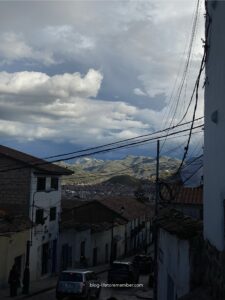
Dedicate this day to wandering through the historic cobblestone streets, shopping for souvenirs and soaking in the atmosphere. If you want to take souvenirs home from your trip, Cusco is 100% the best place to get them!
– Mercado Típico San Blas: Instead of only visiting the famous San Pedro Market, walk up to the Mercado Típico San Blas. It has such a local, bohemian vibe, with amazing food.

– Where to Eat: For all my food recommendations, check out my Vegan Travel & Food Guide to Peru! Most of my top food spots are actually right here in Cusco since there was just too much to try haha.
– Consider a Peruvian Cooking Class: If you’re interested, I’d highly recommend joining a local cooking class. I personally didn’t get to do one, but it sounds like such a fun experience!
DAY 7 – Rainbow Mountains
Next up, dedicate a day to visiting the famous Rainbow Mountains! This is actually one spot we sadly had to skip. Between our tight schedule and underestimating how many days we needed to acclimate to the altitude, we just couldn’t squeeze it in.
There are so many tours to choose from, just check different travel sites like GetYourGuide or Viator. If you’re traveling during peak season, I’d definitely book a tour a few days ahead, since the popular groups book out fast!

Weather & Layering Tip: Weather in the mountains changes fast! Even if Cusco feels relatively warm, higher-altitude spots can get extremely cold and windy in seconds. Since most of us already struggle with overpacking, winter clothes usually don’t have a spot in the backpack. But don’t worry, because Cusco has a few outdoor rental shops! You can easily rent winter jackets, trekking poles, or even head lamps for a few days and just return them when you get back.
DAY 8 – Trek Briefing & final Prep in Cusco
The day before your hike to Machu Picchu, you’ll meet with your tour company for a pre-trek briefing. This is where you get all the critical details: trail routes, safety guidelines and your rented gear (duffel bags, sleeping bags, trekking poles). This was the moment everything started to feel super real, but honestly, I was just excited!

Packing Checklist: Before heading into the mountains, make sure you pack right! Check out our ultimate Backpacking Packing List and the Travel Essentials Guide to make sure you didn’t leave any must-have gear behind.
Use the rest of your day to shop for any last-minute trail essentials, like extra snacks, toilet paper, or warm socks. After a good dinner, pack your bags and go to bed early!
DAY 9 – 13 The Salkantay Trek to Machu Picchu
Pickup comes early, which means another 3:00 AM alarm!
Honestly, these five days on the trail were the absolute highlight of my entire trip to Peru and I know you’ll love it just as much.

Since I wrote a detailed step-by-step guide, covering every single day on the trail, I won’t share all the details here. Head over to my complete Salkantay Trek to Machu Picchu Guide for the day-by-day breakdown, exact packing list and important booking overview!

DAY 14 – Salt Mines & flight home
Your last day in Cusco! Depending on what time your flight leaves, you might still have a few hours to explore around Cusco.
Our flight back to Lima wasn’t until late afternoon, so we decided to spend our last time visiting the Maras Salt Mines (Salineras de Maras). We found a local taxi/colectivo to take us there. It’s a bit of a drive through the Sacred Valley and once you arrive, you have about 30 minutes to walk along the viewpoint.
Honestly, it’s not an absolute must-see if you’re super short on time or exhausted after your trek, but it was still really cool to see in person! Plus, it’s a great spot to pick up authentic Peruvian pink salt as a gift. My friend actually risked exceeding her carry-on baggage weight limit just to bring home two kilos of salt.
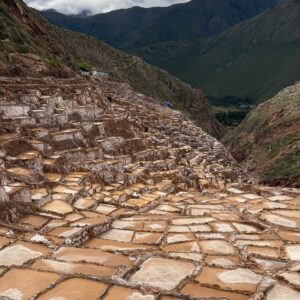
After getting back to Cusco, grab all your things and head to the airport:
- Fly from Cusco back to Lima.
- Transfer to your international flight home.
And just like that, your 2-week trip across Peru comes to an end!
Ready for the big adventure?
I know that there is so much more to see in Peru, but if you have a limited timeline, I’d definitely plan my trip exactly like this!
Want even more travel inspiration?
However, if you have extra time and want to extend your route, definitely check out Vicky and Malte’s blog, Traveling Is Our Passion. They covered even more spots across Peru with so many extra tips and hidden gems that are so worth reading before you go!
If you have any questions about planning your 2-week Peru itinerary, leave a comment below!
Before I left for South America, I constantly got asked the same question: How on earth are you going to manage vegan backpacking in Ecuador and Peru? To be completely

Planning your journey on the Salkantay Trek to Machu Picchu is the first step to an absolute bucket-list experience. Because it’s one of the new seven wonders of the world, figuring out

Backpacking isn’t for the weak, especially when it comes to the packing process! To save as much space as possible and avoid overpacking, I’ve put together this backpacking packing list






![[Ad] Thinking about planning a trip to Peru? 🇵🇪
The Ultimate Peru Travel Itinerary (2 weeks) is out now!
14 - DAY BREAKDOWN:
- Days 1–3: Lima (Barranco street art, Miraflores & Historic Center)
- Day 4: Paracas, Ica & sandboarding in Huacachina
- Days 5–8: Exploring Cusco, Rainbow Mountains & preparing for the trek
- Days 9–13: Salkantay Trek to Machu Picchu
- Day 14: Maras Salt Mines & heading home
📍My recommendation: If you want even more inspiration check out @travelingisourpassion and their awesome Peru guides! Check out their blog through this link: travelingisourpassion.com ✨
Tip: Get your Saily eSIM set up before landing so you have instant internet. Use our code LIFETOREMEMBER for 10% off!
🌻 Find the full 14-day itinerary & everything you need to know before your trip -> LINK IN BIO! (blog-lifetoremember.com)
#perutravelitinerary #perutravel #backpacking](https://blog-lifetoremember.com/wp-content/plugins/instagram-feed/img/placeholder.png)